-
Wurl Perform Continues Streaming's Push to Full-Funnel Capability
Last week brought another step forward in the evolution of streaming and connected TV advertising’s evolution to becoming a full-funnel marketing solution with the launch of Wurl Perform from Wurl, which powers the distribution of 1,200+ streaming channels in 50+ countries. As VideoNuze readers know, I have been steadily beating the drum for how, and why, streaming and CTV advertising need to evolve beyond mainly reach and frequency KPIs, to also enable advertisers to pursue lower-funnel KPIs.
Categories: Advertising
Topics: Wurl
-
Inside the Stream Podcast: Interview With Alan Wolk About His New Smart TV Report
Welcome to this week’s edition of Inside the Stream, the podcast where nScreenMedia’s Chief Analyst Colin Dixon and I take listeners inside the world of streaming video.
This week we’re pleased to have as our guest Alan Wolk, who is the Co-Founder and Chief Analyst at TV[R]EV and who is well-known to all of us in the industry. Alan has released a new report, “The Emerging Smart TV Ecosystem,” which is available for complimentary download and was underwritten by LG Ads, Samsung Ads and VIZIO.
In a nutshell, Alan believes smart TV makers “are having a moment.” A key part of our discussion is whether and how quickly smart TVs will supplant streaming sticks and boxes as the primary connected TV device. Alan also shares his predictions and assumptions for how quickly smart TV advertising will grow over the next several years. We also get into the crucial role of improved user interfaces, how the big 3 work with FAST services to attract and retain viewers, and where Amazon’s new Omnia smart TV fits in.
Smart TVs are helping reinvent the living room experience; hopefully our interview provides new insights for how they’re doing so and over what time period their impact will be felt.
Listen to the podcast (36 minutes, 32 seconds)
Browse all previous podcasts
Subscribe to Inside the Stream
Apple Podcasts Google Podcasts Spotify Amazon Music RSSCategories: Advertising, Devices, Podcasts
Topics: TV[R]EV
-
How CTV Advertising Can Drive Super Bowl Ads Above $10 Million Per Spot
News yesterday that NBC has certain advertisers willing to pay a record price of up to $6.5 million for a 2022 Super Bowl spot, 18% higher than this year, and that it has fewer than five unsold 30-second spots remaining for February’s big game, brought to mind a newsletter I wrote way back in February, 2006 entitled “The $10 Million Super Bowl Ad?” (Unfortunately link no longer available). In it I asserted that Super Bowl ads would eventually command $10 million.
For reference, back in 2007 NBC sold spots in Super Bowl LXI for $2.5 million apiece. That means the price per spot has grown by an annual compounded rate of approximately 6.5%. That is 3.5x the rate of inflation over that 15 year period, which was approximately 1.9%. If Super Bowl ad rates continue to increase at an average of 6.5% per year, then the price will hit $10 million per spot in about 7 years, for the 2029 big game.
(Note, back in 2015, when NBC was charging $4.5 million per Super Bowl spot, NBC Sports Group’s EVP of Sales and Marketing Seth Winter said “$4.5 million is a steal. We think the Super Bowl is worth closer to $10 million in incremental exposure for marketers.” Worth it or not, 6 years later NBC believes a spot is now valued by the market at $6.5 million and to be fair some of the ads’ value is tied to a packaging approach NBC is taking with the 2022 Winter Olympics).What’s going on here?
Categories: Advertising, Sports
Topics: NBC, Super Bowl
-
Inside the Stream Podcast: FAST Ad Revenue in the U.S. Will Double in the Next Two Years
(Reminder - if you are a listener of The VideoNuze Report podcast, please update your feed per below to the new Inside the Stream feeds which have been available for a couple of months....we don't want to lose you as a listener as we complete this transition!)
Welcome to this week’s edition of Inside the Stream, the podcast where nScreenMedia’s Chief Analyst Colin Dixon and I take listeners inside the world of streaming video.
Colin has just released an in-depth white paper on the free ad-supported streaming TV (“FAST”) market, underwritten by Verizon Media, and on today’s podcast he shares his key takeaways and assumptions (note, I have not yet had a chance myself to review the paper which is free to download).
The paper also includes Colin’s forecast for FAST services’ advertising revenues in the U.S. alone. Colin has built his model with both a top-down industry analysis and a bottoms-up review of FAST services including logging ad pod durations, frequency, fill rates, etc, and consulting with numerous industry leaders. Colin sees FASTs generating $2.1 billion in ad revenue in the U.S. in ’21, increasing to $4.1 billion in ’23, though he notes he may be erring on the conservative side.
If you’re interested in the FAST market and especially how it relates to AVOD, Colin’s paper is a must to download. Colin’s also eager to refine his model further, so please feel free to share your feedback directly with him.
Listen to the podcast (33 minutes, 28 seconds)
Browse all previous podcasts
Subscribe to Inside the Stream
Apple Podcasts Google Podcasts Spotify Amazon Music RSS
Categories: Advertising, AVOD, Podcasts
-
What’s Next for Identity in CTV?
Tuesday, August 10, 2021, 1:31 PM ETPosted by:Historically, in digital advertising, third-party cookies have been used to identify audiences in desktop and mobile web environments for the purposes of reaching them and gathering insights on consumer activity. Although the timeline has been extended, advertisers are still grappling with what the future of identity will look like across the entire landscape once cookies are eventually deprecated.
While desktop and mobile are heavily impacted by the fate of cookies, the same challenges that face these environments do not apply to connected TV (CTV) which is an inherently cookie-less environment. Although device identifiers (and their standardization) have advanced audience targeting and measurement capabilities in CTV, challenges do still remain for advertisers that are planning cross-channel or cross-device campaigns.
Categories: Advertising, Data
Topics: Magnite
-
Behold, YouTube
“There’s something happening here,
But what it is ain’t exactly clear…”
-Buffalo Springfield, “For What It’s Worth,” 1967
Late yesterday, Alphabet released its Q2 ’21 earnings. Included was the single snippet of financial information for YouTube that Alphabet began reporting a couple of years ago: “YouTube ads,” which represents YouTube’s global advertising revenue (non-ad revenue such as YouTube TV and YouTube Music subscriptions, etc. are not included). YouTube’s ad revenue for Q2 ’21 was $7.002 billion, which was 84% higher than the $3.81 billion Covid-affected Q2 ’20 ad revenue, and 94% higher than the $3.60 billion pre-Covid Q2 ’19 ad revenue.
Yes, Covid dampened Q2 '20 ad revenue, as management had previously said. But still, you read those numbers right. An 84% year-over-year increase. On a very large prior number.
Consider a little comparative context for YouTube's $7 billion quarter: YouTube’s ad business alone is nearly the size of Netflix’s entire global subscription business, which generated $7.34 billion in revenue in Q2 ’21. But two years ago, Netflix’s Q2 ’19 revenue was $4.92 billion, which means over the past 2 years, Netflix has increased its second quarter revenue by $2.42 billion, or 49%.YouTube has increased its ads revenue alone by nearly $3.4 billion, or 42% more than Netflix. Since Alphabet does not disclose YouTube’s specific expenses, it is impossible to calculate its profitability. But because virtually all of YouTube’s content comes from third party creators while Netflix’s annual content tab is approaching $20 billion, suffice it to say YouTube’s ad business is far more profitable than Netflix’s subscription business. It is also fair to project that in Q3 ’21 YouTube’s ad revenue will exceed Netflix’s subscription revenue.
Categories: Advertising, Aggregators
Topics: YouTube
-
Research: CTV Ad Frequency Problem is “Highly Exaggerated”
At VideoNuze’s Connected TV Advertising Summit last month, one of the issues most often raised by speakers was frequency. Sometimes speakers articulated the issue through their lens as an industry participant; other times it was from their own personal experience. For example, in our final session of the conference, Cara Lewis, EVP, Head of US Investment for Amplifi USA / Dentsu spoke about her experience streaming during the miserably cold Memorial Day weekend (slightly edited for clarity):
“Frequency is definitely an issue. And I can tell you just for myself and my viewing experience this weekend, it was extremely rainy. And I watched a lot of CTV and I kept on seeing the same commercial over and over again, which is completely frustrating because I'm being told as somebody who's buying these ads that we have a frequency cap. Maybe those advertisers didn’t have one, but if they did what I saw was well over what I know our advertisers put in as a frequency cap.”
My experience mirrors Cara’s, as I mentioned in Q&A after moderating a CTV session at Pubmatic’s ENVISION conference two weeks ago. As VideoNuze readers know, I watch a lot of professional golf, on Golf Channel, NBC and CBS, most often on my Roku devices and using YouTube TV. It is mind-boggling how often the same ads are repeated. Admittedly I’m not sure if what I’m experiencing is a CTV frequency issue. It could have much more to do with the TV network, the rights of tournament sponsors, faulty legacy TV system frequency capping, shortage of available campaigns, etc. Who knows.
Regardless of the root cause, as Cara said, as a viewer it’s frustrating and diminishes the experience (and because I’m never able to fully take my industry analyst hat off, even on weekends, I can’t stop thinking “really, where IS all this great adtech that I write about each week?”)
Having said all of that, a new report from Innovid and the ANA, “Decoding CTV Measurement,” asserts that the frequency problem is actually both “highly exaggerated” and likely only limited to very particular situations. Innovid and ANA studied 35 campaigns from 20 big advertisers, representing $35 million in ad spend across 169 publishers and 25+ connected device types.Categories: Advertising, Analytics
-
Streaming’s Time Problem
Friday, July 16, 2021, 9:14 AM ETPosted by:Video streaming (OTT and CTV) has rapidly accelerated in terms of adoption and strategic importance for media companies. It has enabled a dynamic shift in how we consume content and changed the model for content production and distribution. At the same time, it has created a host of new challenges—especially when it comes to advertising.
This rapid growth and consumer behavior shift has also highlighted the increasing importance of these channels as core revenue generators, witness the acquisitions of Pluto, Tubi, Xumo and the high profile launches of HBO Max, Paramount+, and others. The revenue numbers are large and growing. Hulu is on track to do $2.7 billion in 2021 ad revenue alone, Fox expects Tubi revenue to more than double, and eMarketer projects that CTV ad spending will increase 40% from 2020 to 2021.Categories: Advertising, Technology
Topics: Penthera
-
Mediaocean Acquires Flashtalking as CTV-Focused Dealmaking Remains White Hot
Mediaocean is acquiring Flashtalking, an independent ad-serving and analytics provider. Deal terms were not disclosed but the Wall Street Journal reported the valuation at $500 million. Although Flashtalking offers open web ad serving and dynamic creative optimization (DCO) for the buy side, its fastest-growing business is connected TV ad serving and analytics, Mediaocean’s CMO Aaron Goldman told me in a briefing about the deal.
Aaron noted that CTV is also the fastest-growing part of Mediaocean’s business as well, and that the combined companies will be able to do “ad serving and creative optimization along with audience planning and other workflow for both the buy side and the sell side.” A year ago Mediaocean acquired 4C, giving the company a key role in walled garden ad serving and optimization. Aaron said Flashtalking fills a big remaining gap in its portfolio focused on CTV on the open web for the buy side.Categories: Advertising, Deals & Financings
Topics: Flashtalking, Mediaocean
-
Inside the Stream Podcast: Interview with Innovid’s CEO and Co-Founder Zvika Netter on CTV Dynamics and SPAC
Welcome to this week’s edition of Inside the Stream, the podcast where nScreenMedia’s Chief Analyst Colin Dixon and I take listeners inside the world of streaming video.
This week we’re pleased to have Zvika Netter, CEO and Co-Founder of Innovid, as our guest. Innovid has been in video advertising for 14 years, evolving from an early player in interactive ads to become the leading delivery and measurement platform for brands and agencies. Importantly, as Zvika explains, Innovid has held fast over the years to being independent - not involved with any media buying or selling, which he views as a clear differentiator.
Late last week Innovid achieved a major milestone, by filing to go public via a SPAC. Zvika explains the decision process, and his points are a great counterpart to our conversation last week with JW Player’s Dave Otten, who also considered a SPAC, but decided instead to raise a large private round.
But the bulk of our time with Zvika is spent drilling into CTV, what’s driving the business, the key challenges, how they’re being addressed, what’s ahead, and of course, what role Innovid is playing. For anyone who wants a really deep dive into CTV, the interview is an intimate window into the CTV ad buyers’ perspective and how this is influencing the future shape of the industry.
(Note, Colin and I will be taking a break next week for the holiday, so we’ll be back in a couple of weeks)
Listen to the podcast (32 minutes, 17 seconds)
Browse all previous podcasts
Subscribe to Inside the Stream
Apple Podcasts Google Podcasts Spotify Amazon Music RSSCategories: Advertising, Deals & Financings, Podcasts
Topics: Innovid
-
4 TV Buying Trends to Watch in the Back Half of 2021 (and Beyond)
Thursday, July 1, 2021, 10:15 AM ETPosted by:TV and entertainment viewing patterns changed dramatically in 2020, accelerating numerous evolutions already afoot in TV targeting, reporting, data, measurement and more. What’s around the bend in media buying? Here are a few key areas of industry focus to keep on your radar.
More Is More in Streaming
The appetite for streaming content has skyrocketed and shows no signs of slowing down. Global viewing grew 44 percent during the last three months of 2020, according to research firm Convivia, which tracks 500 million unique viewers and 180 billion streams annually. In fact, within this streaming surge, ad-based video on demand (VOD) is projected to experience 22 percent compound annual growth and become a $20 billion segment by 2024, according to the VAB. If your TV ad strategy hasn’t pivoted to align with this surge, it’s in urgent need of a refresh. It’s also worth noting that this surge in streaming is on top of existing cable viewership, not in place of it.Categories: Advertising
Topics: New York Interconnect
-
Research Shows Strong Interest in Ad-Supported Streaming
Last Friday Hub Research published interesting survey results about consumers’ willingness/desire to watch ad-supported streaming services, especially if it means saving money compared to more expensive ad-free alternatives. No surprise to anyone who’s been playing close attention to the evolving SVOD/AVOD landscape, the research showed strong interest in ad-supported streaming. For me it was further validation of the Connected TV flywheel that I have described that is only going to accelerate adoption as consumption of ad-supported video both deepens and broadens.
Categories: Advertising
Topics: Hub Research
-
Inside the Stream Podcast: Diving Into the Connected TV Advertising Flywheel
Welcome to this week’s edition of Inside the Stream, the podcast where nScreenMedia’s Chief Analyst Colin Dixon and I take listeners inside the world of streaming video.
Today we dive deep into the connected TV advertising flywheel, which I wrote about earlier this week. The TL;DR summary on the CTV ad flywheel is that the massive base of 82% of U.S. households with a CTV device has created a viewing platform for a growing array of free, high-quality ad-supported streaming services, the funding for which is coming from a robust CTV ad model that is siphoning spending from both linear TV budgets and mid-to-lower funnel digital/performance-oriented budgets. (Yes, I know that is a mouthful, but I break it all down on the podcast)
The CTV ad flywheel is real and it is accelerating as each element gains steam. Evidence of this abounds; just this week Disney said that 40% of its upfront commitments were focused on streaming, Roku announced record viewership of The Roku Channel following the launch of its Roku Originals (primarily the Quibi library it acquired), and Nielsen launched The Gauge, a new reporting visualization for broadcast, cable and streaming (Nielsen said streaming’s share of TV watch time was 14% in 2019, 20% in 2020 and likely 33% by the end of 2021)
Listen to the podcast (29 minutes, 29 seconds)
Browse all previous podcasts
Subscribe to Inside the Stream
Apple Podcasts Google Podcasts Spotify Amazon Music RSS
Note I’ll continue to publish Inside the Stream in the prior feedCategories: Advertising, Podcasts
Topics: Connected TV Advertising Summit 2021, Podcast
-
Research: Frequency is Viewers’ Top Problem With Streaming Ads
Conviva’s new State of Streaming Advertising 2021 report found that frequency is the number one problem viewers have with streaming video ads. The report is based on a survey of 1,944 adults 18+ who watch TV or streaming video, conducted by Dynata, along with Conviva’s proprietary viewer data. 59% of respondents either agreed or strongly agreed that “there are too many streaming ads repeated during the same break/episode.” The next most-cited reason, by 54% of respondents, was “when ads fail or take too long to load.” Over, just 36% of respondents said they were satisfied with advertising in streaming.
Categories: Advertising
Topics: Conviva
-
The Connected TV Advertising Flywheel is Here, and It’s Only Going to Accelerate
Last week’s Connected TV Ad Summit, with 46 speakers and 14 sessions, was chock full of insights from executives on the front line of connected TV advertising. Importantly, the speakers brought a diversity of perspectives; ad buyers from agencies, ad sellers from content providers, technology providers enabling CTV advertising and analysts studying and forecasting the industry.
As the conference host and curator of all the sessions and questions, it was a golden opportunity to fully immerse myself in understanding the critical industry issues. I’ll be publishing a debrief document with all of my key takeaways, but for today, I just want to share one overarching theme that crystallized: a connected TV advertising flywheel is here, and it's only going to accelerate.
The flywheel concept is well-known to all of us; the idea that when interrelated elements of a business or industry reinforce one another, the momentum of the overall whole is accelerated. For me, the best illustration of the flywheel remains Jeff Bezos’s description of the role video plays in Amazon Prime, in his interview at the Code Conference in 2016. Summing up video’s interrelationship with Prime and the resulting flywheel, Bezos said simply, “When we win a Golden Globe, it helps us sell more shoes.”
Back to the CTV advertising flywheel, the three core components are 1) the large and growing base of households with active CTV devices including players, sticks, smart TVs, etc., 2) the proliferation of ad-supported and hybrid paid/ad-supported streaming services, each one with ever-better content and 3) the robustness of CTV ad monetization itself and how this is driving more spending into the category.Categories: Advertising, Devices
Topics: Connected TV Advertising Summit 2021
-
CTV Ad Summit Session Videos (Second Day) Are Available
Following up yesterday’s post, today I’m pleased to share video recordings of the 7 sessions from the second afternoon of last week’s Connected TV Advertising Summit virtual. Below I have also included the session description for each, along with the speakers. (Note the CTV Ad Summit web site has been de-activated, post conference). Reminder, the first afternoon's session recordings are here.
For anyone focused on how to succeed in CTV advertising, there are lots of really valuable insights and data. For example, to get a sense of why the CTV ad opportunity will exceed $27 billion by 2025 in the U.S. alone, watch the presentation from eMarketer / Insider Intelligence’s Eric Haggstrom. To learn how buyers are thinking about CTV ads, watch the session with Amplifi/Dentsu’s Mike Law and Cara Lewis. To learn about Roku’s playbook for CTV success, watch the interview with Alison Levin.
And don’t miss the panels focused on programmatic’s role in CTV, how smart TV makers are positioning themselves for ad success, the new rules of targeting/data and the big changes coming to TV advertising.
If you attended please see my email yesterday with an attendee survey. I’m very interested in your feedback on the Summit and how to further improve it.Categories: Advertising, Events
Topics: Connected TV Advertising Summit 2021
-
CTV Ad Summit Session Videos (First Day) Are Available
Last Wednesday and Thursday’s Connected TV Ad Summit virtual included 46 industry executives speaking on 14 different sessions over two afternoon. Having watched all of the sessions, I think they include tons of valuable insights and data that is actionable for anyone looking to succeed in CTV advertising.
I’ll be posting more in-depth about my key takeaways from the CTV Ad Summit, but for today, I’m pleased to share video recordings of the 7 sessions from the first afternoon (I’ll post the videos from the second afternoon tomorrow). Below I have also included the session description for each, along with the speakers. (Note the CTV Ad Summit web site has been de-activated, post conference).
If you attended please keep an eye out for email with an attendee survey. I’m very interested in your feedback on the Summit and how to further improve it.Categories: Advertising, Events
Topics: Connected TV Advertising Summit 2021
-
Connected TV Advertising Summit Virtual on June 9th and 10th
The Connected TV Advertising Summit virtual will be taking place on June 9th and 10th, starting at 1pm ET / 10am PT each day.
Registration is complimentary. If you haven’t registered already, you can do so during the Summit and you’ll receive an email from VideoNuze Events with the Zoom links.
You can also follow along on Twitter at #CTVAds2021. See you at the Summit!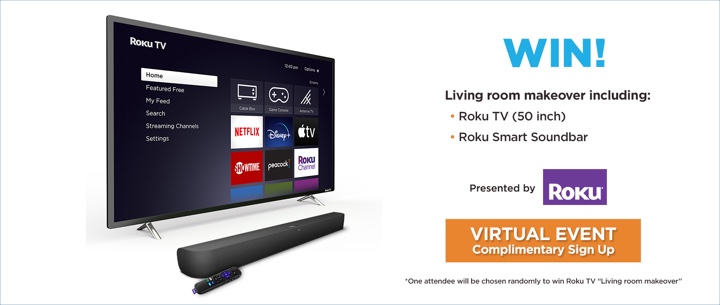
Categories: Advertising, Devices, Events
Topics: Connected TV Advertising Summit 2021
-
Don’t Delay: Tomorrow the CTV Ad Summit (virtual) Starts, With Over 45 Speakers on 14 Sessions
A final reminder, tomorrow afternoon and Thursday afternoon are VideoNuze’s Connected TV Advertising Summit virtual, featuring over 45 speakers on 14 sessions. Registration for the CTV Ad Summit is complimentary and all attendees will be entered to win a 50-inch Roku TV and Smart Soundbar, generously provided by Roku.
Each afternoon will kick off with a research presentation sizing the massive size of the CTV advertising opportunity. Tomorrow Bruce Leichtman from Leichtman Research Group will share newly released data highlighting, among other things, that CTVs are now in 82% of U.S. homes, with over 400 million devices deployed. On Thursday Eric Haggstrom from eMarketer / Insider Intelligence will share the details of the firm’s CTV ad forecast in the U.S., which it recently increased to over $27 billion per year by 2025.
The conference also features executives from Roku, NBCUniversal, Bloomberg, Tubi, Amplifi/Dentsu, Publicis, LG, Samsung, VIZIO, Vevo, A+E Networks, fuboTV, Crackle, Digitas and many others. They will explore all of the most important topics in CTV advertising, including challenges that still need to be worked out, in transparency, measurement and frequency, for example.
Many thanks to our partners Beachfront, Comcast Technology Solutions, DoubleVerify, Evergent, Extreme Reach, IRIS.TV, Mediaocean, Roku, Verizon Media, Wurl and Xandr.
REGISTER NOW!
(If you’ve already signed up, please disregard this message and check your inbox for important Zoom links for the conference.)
Categories: Advertising, Devices, Events
Topics: Connected TV Advertising Summit 2021
-
IRIS.TV and SpotX Bring Contextual Targeting Segments to CTV
IRIS.TV and SpotX (part of Magnite) announced this morning they’re partnering to offer industry-standard contextual targeting segments to SpotX’s video ad supply. The move will give ad buyers the ability to target and verify the category of video on all screens.
SpotX will be able to give ad buyers access to video-level metadata that has been “IRIS-enabled” for targeting in CTV and digital video, driving more value for content owners, especially in in brand-safe CTV where viewership is soaring and ad performance is superior.
Noting the challenges the partnership will overcome, SpotX’s SVP of Strategic Partnerships Kristen William said, “Our clients have been demanding increased visibility into the content they are advertising in, but access to contextual data is extremely complicated as it comes in a variety of formats as well as being locked behind content management systems and video players.”
For more on how IRIS.TV enables video data for contextual segmentation to create more value for both ad buyers and content owners, see my interview below with VP of Publisher Partnerships Lauren Gabriele. Lauren will also be moderating a session at this week’s VideoNuze Connected TV Ad Summit virtual “Targeting in CTV: The New Data Paradigm,” with Xumo, Index Exchange and Icon Media Direct.Categories: Advertising, Data, Technology
Topics: Connected TV Advertising Summit 2021, IRIS.TV, Magnite, SpotX
Posts for 'Advertising'




Connect with VideoNuze
Exclusive News Roundup
- Netflix and TF1 Kick Off Landmark Streaming-Broadcast Tie-Up in France Variety
- Prime Video Bets Its Future in Asia-Pacific on Building the “Entertainment Hub” The Hollywood Reporter
- HBO Max’s annual plans are 28 percent off right now The Verge
- The Horror Films Disrupting the Summer Box Office, in 4 Charts NY Times
- Get ready for Disney's big AI ads push Business Insider
- Netflix Isn’t Interested in Lionsgate Despite Takeover Speculation The Wrap