-
I Got My Official Comcast-TiVo Beta Trial Invite This Week
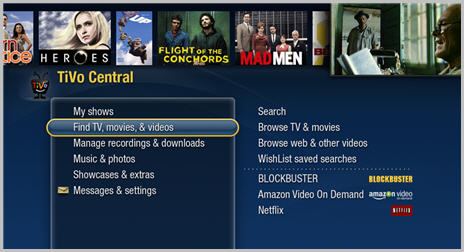 This week I heard from the folks at Comcast who are running the upcoming beta trial with TiVo. I'm officially on the list and should be getting a box soon. Hooray.
As many of you are aware, Comcast has been on the cusp of kicking off this trial for some time now, which will let real users experience the joys of TiVo software running inside a Comcast digital set-top box. This will mark a milestone for Comcast in delivering a better user experience than the generic DVR feature that it and other cable operators rolled out a couple of years ago.
After hosting Jeff Klugman, TiVo's Senior VP, GM of its Service Provider and Advertising Engineering Division for a "fireside chat" at a cable industry conference last July, I became very bullish on the opportunity for TiVo to transform itself through these cable deals into a software and services powerhouse. In other words, long-term getting out of the high-cost, low-margin consumer device business.
Running a successful trial with Comcast is all-important to TiVo and they've been working for 2 years on this integration. Success will likely mean wide rollouts with Comcast, followed by #3 operator Cox (with whom TiVo already has a deal), and then others no doubt to follow. I'll be keeping you posted on my experience when I get the box. If it works as advertised it's going to be a killer device.
Categories: Cable TV Operators, Devices, Partnerships
-
Lifetime Debuts Programs on Yahoo, iTunes, How Long Will These Happy Faces Prevail?
 B&C carried word yesterday that Lifetime will be the latest cable network to eschew unveiling its new programs or seasons on air, preferring instead to go the online route. This follows similar recent moves by Discovery/TLC, FX (in partnership with cousin company MySpace) and others, with plenty, I suspect, yet to come.
For now, there seem to be happy faces all around the cable industry regarding these online premieres. Cable networks argue that online generates upfront buzz leading to higher awareness and ratings for on air. This in turn builds value in multichannel subscription services. This was the point that Bruce Campbell, Discovery's president of digital media made at the recent CTAM NY panel I moderated. Of course, networks are doing the right thing following audiences online, all the while continuing to proclaim that their traditional affiliates (cable and satellite operators) are their most important customers.
Maybe I'm missing something, but I doubt all these happy faces will prevail for long. My guess is that at some point next year the lights are going to go on in the cable operator community that the portals and other new distributors are getting access to programs that operators' monthly affiliate fees pay for in the first place. Of course gone are the days of cable exclusivity, but if and when operators flex their muscles and express their change of heart about online premieres, my bet is they'll stop.
Operators should know that, at some point, the law of "there's only 24 hours in a day" kicks in - so if someone caught the premiere online, they don't actually need to tune in for the on air debut. And of course, do cable operators really want to allow viewers to grow accustomed to seeing high-quality long form programming online and/or through portals?
I think we'll see lots more of this activity until the cable operators call "foul". In the meantime, operators would be smart to start getting some of these premieres on their own portals, to bolster their own online positions.
Categories: Cable Networks, Partnerships, Portals
Topics: Discovery, FX, Lifetime, MySpace, TLC
-
VideoNuze Goes Live
 It's official - after months of intense development, VideoNuze went live today. I'm very excited about this first version of the site, and am deeply indebted to many of you who have provided me tremendous feedback, insight and support on the way to today's launch.
VideoNuze 1.0 accomplishes what I set out to do at launch - provide a high-value, user-friendly online publication and community for busy video executives seeking to keep up-to-date with the industry's vast array of news and better understand what it means to their businesses. The two primary components of the site, "Analysis" and "News Roundup", are already well-stocked with content and will grow rapidly over time. In addition, I have a full roadmap of features which will also be introduced in the coming months.
As with all online initiatives, VideoNuze is a work in progress and I welcome your feedback. Please have a good look around and let me know what you think. What works well? What's missing? What's broken? No comment or observation is too small, I invite them all.
Today's launch wouldn't be possible without the support of an incredible group of charter sponsors, so I want to acknowledge and thank them again. Each signed on when there was not so much as an official name for the effort. They made a bet on my concept - that an online publication that relentlessly focuses on informing and educating broadband video decision-makers would add real value to the market. I greatly appreciate their confidence.
These companies are all leaders in the fast-evolving video industry and I encourage you to take time to learn about how they can contribute to your company's success:
If you are interested in learning about VideoNuze sponsorships, please click here for more information or contact me.And if you'd like to know more about Broadband Video Focus, my firm's subscription market intelligence service, please click here.I look forward to hearing from you!Categories: Miscellaneous
Topics: Akamai, Atlas Venture, Digitalsmiths, ExtendMedia, ICTV, PermissionTV, thePlatform, Voxant
-
Music Videos are Another Example of Broadband's Ability to Create Unforeseen Revenues
 On my flight home last night I was thumbing through my hotel-provided USA Today and happened on this interesting piece about how record labels are transforming their music videos from promotional tool to a bona fide new revenue source. Chalk up another unforeseen win for broadband's ability to enable new business models.
Rio Caraeff, EVP of eLabs, Universal Music Group's digital division says that licensing its music videos to the likes of Yahoo, AOL, YouTube and others now generates over $20M/year and is growing briskly. Supporting a forecast of solid growth ahead, Ian Rogers, Yahoo Music's GM believes that viewership of music videos will expand by "10 to 100 times over the next one to two years."
According to comScore, Yahoo is the web's #1 music destination, pulling in 23.4M uniques in August. Caraeff also noted that streaming accounts for the lion's share of the revenue, with paid downloads of music videos still miniscule. He cites the best-selling download of all-time, a Justin Timberlake single as generating only 58K buys, which, at $1.99 apiece, adds up to less than $120K.
None of this is to say that music videos won't continue to be used as promotional fodder. But these nascent, growing licensing and ad-sharing revenues show broadband's power to mine content value that was previously inaccessible. Sports leagues, particularly MLB.com, have been masterful at this as well, driving successful broadband-only subscription businesses. I expect others to sprout up as well.
Categories: Music
Topics: AOL, eLabs, MySpace, Sony BMG, Universal Music Group, Yahoo, YouTube
-
Local TV Broadcasters: Gird Yourselves for Broadband's Onslaught
Today I had the privilege of speaking to a top broadcast TV group's senior executives at their annual offsite. Their president has seen my presentation at the NAB Futures Summit 6 months ago and invited me in to speak.
It's important to recognize there's a bit of a schism happening in the broadcast TV industry, fueled by broadband. One the one hand, broadcast networks (ABC, CBS, FOX, NBC) are rushing headlong into broadband distribution. It's hard to remember, but it's been less than 2 years since Disney/ABC did its first digital distribution deal with iTunes. Since that time all networks have struck iTunes and other download deals, have put made most of their hit shows available for streaming, and more recently have plowed into new ventures (Hulu, CBS IAN, etc.) meant to dramatically broaden their digital reach. In short, the networks have smelled the coffee - they are moving to create what I've called a "digital replica" of the traditional broadcast industry.
None of this is good news for local TV broadcasters, until recently the only place to go for networks' hit programs. Naturally these digital alternatives will further fragment audiences jeopardizing lead-ins for late news and undermining ad revenues. On the bright side, many broadcasters aren't sitting still. In recent research Broadband Directions completed, we found that 46 of 50 (92%) stations we've been tracking now offer broadband video at their web sites. And of the 46, 39 (85%) are selling some kind of ads (pre-roll, display, sponsorships) against their video.
While this is encouraging, there's a long way to go. By and large local broadcasters' broadband video is a collection of newsclips, offering little personalization, targeted ads or widespread syndication. These and other areas offer broadcasters ample opportunity. Broadband is a real game-changer for local broadcasters, who need to gird themselves for its coming onslaught. But with sufficient willingness to adapt their models, they should be beneficiaries as well.
Categories: Broadcasters
-
Review of Akamai Analyst Day
 As mentioned in my earlier post, today I was at Akamai (disclaimer: Akamai is a VideoNuze sponsor) for their annual Analyst Day. I only stayed for the morning sessions, but, reflecting how important the Media and Entertainment (M&E) vertical has become for Akamai, they put a huge emphasis on M&E updates, so I think I was exposed to all their news. Following is an objective review of my takeaways:
As the largest CDN and established incumbent in broadband video delivery, Akamai's capabilities and plans are crucial to broadband video's continued growth. To be sure, the company's market dominance has been challenged by newer rivals (which continue to emerge seemingly daily) and talk of alternative approaches such as P2P continues to swirl.
As with its underlying web content delivery model, Akamai stakes its differentiation - and premium pricing - on the company's highly distributed content delivery architecture. The company now has 27,000 servers in 1,600 locations within 900 networks. As Tom Leighton,Chief Scientist and co-founder pointed out repeatedly in his presentation, this model contrasts with its competitors' model of co-locating their servers exclusively in big data centers (where Akamai has servers as well).
Akamai's distributed footprint addresses a key chokepoint in the Internet: the lagging performance the "middle mile", the vast expanse of routers that forms the guts of the Internet between the first mile data centers/Tier 1 interconnects and the last mile cable/DSL/Ethernet connections. By Akamai's calculations, the performance of the "middle mile" has grown by only 6x, while the first mile has improved by 20x and the last mile 50x (think how your cable model blows away those pokey old dialup modems).
In Tom's view, competitors' performance delivering video and other applications is handicapped because their servers don't fully overcome the middle mile's deficiencies. Akamai's goal is to be serving content from servers within 10 miles of the user. Tom's estimates are that Akamai can serve content 2-6x faster than competitors and with 2-8x more reliability. These figures are magnified when it comes to delivering high quality video files. In a test Akamai did for a major media company trying to serve 4GB video files to Japan, it took Akamai 12.2 minutes to deliver the file, while servers located 500-1,000 miles away took 2.2 hours, 3,000 miles away took 8.16 hours and 6,000 miles away 20.hours. This was of course an Akamai test, but, assuming the data holds up under closer analysis, this would be pretty compelling for media companies looking to optimize user experiences.
To debunk pundits who have suggested the Internet cannot scale to deliver the explosion of video, particuarly HD, Tom drew a hypothetical case of 50M users each streaming at 2 megabits per second resuting in total bandwidth needs of 100TB of capacity. Akamai's goal is to have just north of that deployed by 2010. Estimating usage is notoriously difficult so who knows whether having 100TB will be sufficient or not, but again by Tom's calculations, none of its competitors will be able to come close.
A recent challenge to Akamai's architecture approach has been P2P's potential. Akamai acquired Red Swoosh and outlined how it is integrating this technology. For Akamai, standalone P2P delivery isn't realistic, rather it requires both CDN-assist and also cooperation from willing customers and ISPs who could squelch its adoption. It sounds like the Red Swoosh technology is being slowly introduced to select customers and to test its acceptance. Of course Akamai would like to reduce costs for its customers, but the company made clear P2P is no panacea for content owners expecting to dramatically slash their delivery costs.
Yet another challenge has been the prospect of service providers and telcos building out their own private CDNs using gear from companies like Cisco. In an offline chat with Tom, he mentioned that this approach has been around for years, but hasn't seen significant adoption. So he expects some providers will continue to pursue it, but ultimately, Akamai's overall solution approach will always give it an edge over these homegrown alternatives.
It's clear that Akamai also sees delivering HD as a key driver of its future success. Customers are expecting ever-higher quality, and this plays into the company's positioning as a non-commoditized provider. So while Akamai acknowledges that price is a key factor in customers' decision-making, it's quite clear that the company is relying on data from its own testing and actual customers' performance to demonstrate why quality and reliability matter, and how these translate into greater revenues and user loyalty. Given the wealth of data they shared today, it is evident that Akamai's sales approach is pretty sophisticated.
Having developed and seen myriad business cases for small and large video providers, I know first-hand how significant the delivery cost line item is in these P&Ls and how tempting it is to zero in on low price as the key decision criterion. Expect Akamai to keep making the case that while important, it is far from the only variable.
Categories: CDNs
Topics: Akamai, Cisco, Red Swoosh
-
WCSN: Succeeding With the Long Tail of Sports
 Yesterday's news that World Championship Sports Network (WCSN) has sold a majority interest to Leo Hindery's InterMedia Partners shows that the company's success in aggregating the Long Tail of sports is succeeding. In addition, it shows there are slivers of success in paid subscription models. To be sure, WSCN also sells plenty of ads, but the core of the company's model is its $4.95/mo or $49.95/year subscriptions.
 Hindery, who in his past life headed former #1 cable operator TCI, knows from TCI's old Liberty Media affiliate, as much as anyone about creating programming value, and this move should certainly be read as a major endorsement of WCSN's strategy. The company has come a long way quickly, I recall speaking to CEO Claude Ruibal about 18 months ago when he was first fleshing out his distribution strategy. Kudos to him and his team for doing deals with many of the majors (MSN, AOL, Yahoo, FoxSports, ESPN.com, etc.) and no doubt driving dramatic traffic gains.
For those not familiar with WCSN, their model has focused on aggregating exclusive Internet rights from key Olympics sports associations, whose sports are generally not well-covered on broadcast or cable TV.
WCSN has been remarkably successful in aggregating these rights. The site lists at least 20 association partners and says "WCSN’s sports coverage includes over 200 live annual events, offering more 2,000 hours of annual original event programming and more than 10,000 hours of archival programming..." One can only imagine the frequent flyer miles that have been racked up by WCSN executives getting these deals done.
WCSN’s sports coverage includes over 200 live annual events, offering more 2,000 hours of annual original event programming and more than 10,000 hours of archival programming..." One can only imagine the frequent flyer miles that have been racked up by WCSN executives getting these deals done.
A key lesson to WCSN's subscription success is the incredible allure of sports programming. No matter how niche, there seems to always an audience of rabid fans. And their willingness to pay for coverage is insatiable. Now it looks like WCSN is going to ramp up its ad sales as well. In doing the spade work to aggregate this long list broadband rights with clear monetization opportunities, WCSN has created substantial value. No doubt as the business continues to grow it will be an attractive acquisition candidate. If I had to bet, I'd expect an exit to ESPN, the sporting world's 800 pound gorilla, will be in the offing down the road.
Categories: Deals & Financings, Sports
Topics: InterMedia, WCSN
-
MGM's "Lions for Lambs" Google/YouTube Promotion Continues Studios' UGC Efforts
MGM is the latest studio to reach out to fans to help promote one of its films, the upcoming "Lions for Lambs". In a deal with Google/YouTube, the studio is sponsoring a contest in which users can submit a 90 second video on a topic they're passionate about. Entries are being accepted until Oct. 17th and the winner, who will have $25,000 donated to a charity of his/her choice, will be selected on Nov 9th.
This promotion follows the mashup competition Metacafe and Universal conducted this past summer around the studio's "Bourne Ultimatum" release. At the time, I noted that broadband is introducing a whole new element into the film marketing equation, opening up huge opportunities for creativity and fan involvement. As the tools continue to improve I expect we're going to see a lot more of these "UGC-assisted" campaigns.
Studios (and others) are going to continue to experiment with just how much fans are willing to be a part of the marketing machinery. Of course nobody knows, but my guess is that if the incentives are right, the promotions are fun and the stars are compelling, it's going to be a pretty rich vein for film marketers to tap into.
Categories: Brand Marketing, FIlms, Partnerships, UGC
Topics: Google, Lions for Lambs, MGM, YouTube
VideoNuze Posts

Connect with VideoNuze
Exclusive News Roundup
- NFL Makes Its Case to FCC During Regulatory Scrutiny WSJ
- Peacock gains subscribers, but losses widen in Q1 The Streamable
- Comcast beats revenue, earnings expectations as broadband losses improve CNBC
- YouTube Inks Deal Making SiriusXM Exclusive Audio Advertising Rep in U.S. Variety
- Netflix plans to buy historic Radford Studio Center as Hollywood enters new era LA Times
- Peacock’s Ad-Free Tier Coming To Roku Premium Subscriptions Under New Agreement Deadline