-
Zucker Preparing NBC for Broadband Era
Jeff Zucker, NBCU's president and CEO gave a stirring, candid keynote at the NATPE show yesterday, in which he essentially said that all the rules that the broadcast TV industry has lived by for six decades have now changed. It was a pretty blunt assessment, given in terms not often heard from PR-cautious CEOs.
I thought Zucker nailed it on the head when he said that "technology is transforming every part of our business," suggesting that to succeed in the future the company must re-engineer itself from top to bottom.
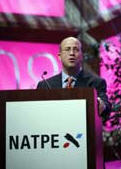 The technology drivers - DVRs, broadband distribution, VOD, mobile and inexpensive production equipment are all leading to fundamental changes in distribution, advertising sales, marketing and content development.
 Zucker said that the "historic economic model supporting broadcast TV is wounded." This is well exemplified in the broadband space, where networks have eagerly pushed their hit programs online. Yet in referring to its broadband initiatives, Zucker acknowledged, "Our challenge with all these ventures is to effectively monetize them so that we do not end up trading analog dollars for digital pennies," noting "This is the Number 1 challenge for everyone in this industry today."
I believe many of the steps Zucker's taking will help surmount this challenge. They include: Improving the allocation of resources and efficiency of the pilot process to help NBC maximize the opportunity that the mass-scale broadcast business still provides. Expanding the marketing of its programs beyond traditional influencers to help tap into the water coolers of the digital age. Broadening the role of its stations encompassing all local media opportunities instead of just selling TV ad space to enhance their competitiveness. Setting up digital studios to produce content geared for the broadband and mobile to tap new audiences.
Listening to Zucker, I felt myself being optimistic about his leadership and the likelihood that his game plan will ultimately lead to a successful transformation of the business. It won't come without plenty of bumps in the road, but it did strike me as clear-headed thinking which was sensitive to the network's traditions, but not obsequious to them. Throughout his keynote, he repeatedly reminded the audience that great storytelling and content is what all matters. The story of how NBC and the other networks will learn to succeed in the broadband era is definitely one worth following.
Categories: Broadcasters
Topics: NBCU
-
Here Comes the Video "Experience Era"
OK, one last post related to CES, and then I promise to shut up about the show.
Observing the goings-on this week, it is evident that both content and consumer electronics firms have come to the same basic conclusion: each industry's success is inextricably tied to the other's. Each recognizes that the business dynamics of the future requires a new way of differentiating their products than they are accustomed. That means, for example, that TV makers can no longer just boast about better pictures. And that content companies can no longer bank on bigger stars or funnier sitcoms to deliver audiences and profits.
Rather, both industries recognize that we are moving into what I would call the "experience era" for video. That's to say, success with consumers is going to rest more on these industries' ability to deliver superior experiences which integrate content and technology in new and compelling ways. Rather than oohing and ahhing about their new TV's picture quality or how hilarious a certain episode was, going forward consumers will increasingly cite "how cool" something is.
"How cool" are code words for "how compelling is the experience". The new currency of video hipness will require that when I invite friends to my house and want to show off, I need to have more than just a honking-big screen or a digital collection of old programs - those will be commonplace. Instead, the experiences are what will matter. Things like seamlessly accessing broadband content on my TV, interacting with it -- along with other viewers -- from my couch, and moving it around my house for playback anywhere, in a snap. Delivering these types of experiences (and more) is the new competitive bar that content and technology firms should be aiming for.
My sense is these industry executives know this, and the partnerships we saw unveiled -- and those yet to come -- demonstrate this recognition. Listen to what Bob Scaglione, Sharp's SVP Marketing said in this NY Times piece: "We already all have beautiful HD televisions. How do you differentiate? One way to provide some really unique differentiation is to provide new content. That's why we're fighting to find the right content providers."
And then what Beth Comstock, president of NBC Universal Integrated Media said: "You can't talk about consumer electronics without talking about content.....We try every new technology that comes along."
Executives across the content and technology spectrum must understand the experience era is now upon us. Steve Jobs and Apple's iPod ushered in the experience era in the music business. We now wait to see which companies in the video industry will do the same and reach for Apple's success. In a hyper competitive world, those who deliver strongly against consumers' needs and desires will be the ultimate winners in the experience battle now underway.
Agree or disagree? Post a comment and let us all know!
Categories: Broadcasters, Devices, Strategy
Topics: Apple, iPod, NBCU, Sharp
-
Back from NAB - Super Session was Standing Room Only
I'm back in Boston after a short, but grueling (tip: don't fly through 2 East Coast airports during a Nor'easter!) trip out to NAB. Our Super Session ("The Revolutionizing Impact of Broadband Video") was SRO, overflowing the room that seated 700. David Eun led us off with a great keynote with my key takeaways:- "Market for content is much larger than anyone has every imagined"
- "We see ourselves as a conduit, connecting users, advertisers and content providers"
- "Broadband provides an infinite # of at-bats, the traditonal scarcity is gone"
- "Content identification isn't easy. If it were, we'd have it by now."
- "We are in a clip-driven culture. YouTube now delivering well over 100M clips per day."
After Dave's talk, our panel (George Kliavkoff from NBCU, Dan Scheinman from Cisco, Blake Krikorian from Sling, Shawn Gold from MySpace and Gary Gannaway from WorldNow) got down to business. George, who's the acting head of the JV with NBCU and News Corp, filled in some details for how the venture will work, and that affiliates will be a key part of it going forward.The panelists all agreed that community is going to be a big part of the equation moving forward and that broadcasters will be embracing in a big way. Gary articulated well that local broadcasters have a huge opportunity to excel in local content in a way that big portals will never be able to match, and that if they sell their inventory the right way, they'll be able to avoid being commoditized.I tried to get Dan to take the bait on whether the era of broadband-delivered TV programming spells concern for cable TV operators. But given Cisco's ownership of Scientific Atlanta, he deftly deflected my attempt to stir the pot....Lastly, Blake encouraged broadcasters to see his Slingbox as an opportunity for them to build loyalty with their viewers, both for viewership while on the road, and also for deepening viewership, through non-TV displays. All-in-all, despite the fact that the first attendee question during a brief Q&A session labeled us as "dying dinosaurs", it was a spirited and lively session!Categories: Broadcasters, Devices, Events, Video Sharing
Topics: Cisco, MySpace, NBCU, Sling, WorldNow
Posts for 'NBCU'

Previous |
Connect with VideoNuze
Exclusive News Roundup
- Disney Planning TV Restructuring as Streamlining Continues WSJ
- Ben Affleck Used AI “For Lots of Things” in His New Netflix Movie ‘Animals’ The Hollywood Reporter
- NBCUniversal is cutting a few hundred global streaming tech employees Business Insider
- Google Wants Hollywood to Stop Being So Afraid of Technology NY Times
- Amazon's new Fire TV interface and mobile app will come with Alexa+ upgrades Engadget
- NPR, the quintessential audio news brand, adapts to a video-first future Nieman Lab